


ISO 27001 - Information Security Management Systems
ISO/IEC 27001 is the world’s leading international standard for Information Security Management Systems (ISMS), jointly developed by the International Organization for Standardization (ISO) and the International Electrotechnical Commission (IEC).
Organizations of any size or sector can use ISO 27001 to establish, implement, operate, monitor, and continually improve how they protect sensitive information.
The standard provides a structured, risk-based framework built around three core pillars of information security: confidentiality, integrity, and availability. Instead of offering a rigid checklist, ISO 27001 helps organizations identify their specific security risks and apply appropriate controls to manage them effectively.
The latest version, ISO/IEC 27001:2022, modernizes the framework and replaces the earlier 2013 edition. It emphasizes risk assessment, risk treatment, and continual improvement to ensure your ISMS evolves alongside new cyber threats and business changes.
Achieving ISO 27001 certification demonstrates to clients, partners, and regulators that your organization protects its most valuable assets including customer data, employee records, intellectual property, and brand reputation according to globally recognized best practices.
Who Should Apply for ISO/IEC 27001 Certification?
ISO 27001 is suitable for organizations of any size, industry, or sector. It provides a structured approach to protecting sensitive information through an effective Information Security Management System (ISMS).
Organizations that handle confidential data such as customer information, financial records, employee data, or intellectual property benefit significantly from implementing ISO 27001.
Many enterprises and government organizations also require vendors and partners to hold ISO 27001 certification before entering contracts, making certification both a security measure and a competitive advantage.
Industries That Benefit Most from ISO 27001
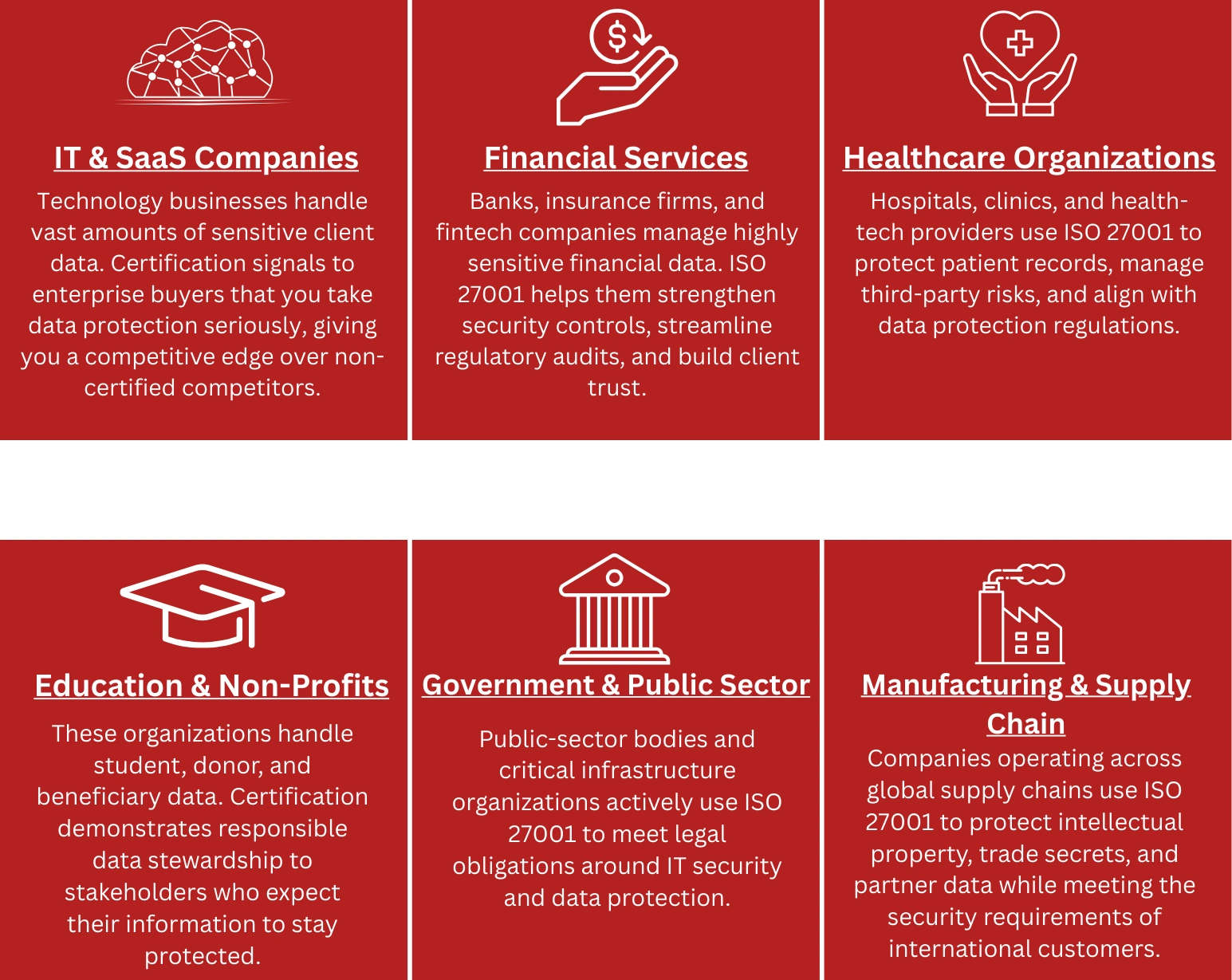
Even if your industry does not yet mandate ISO 27001 certification, organizations are increasingly expected to demonstrate strong information security practices. ISO 27001 provides a globally trusted way to do exactly that.
At Quality Austria Central Asia, we support organizations across India and Central Asia in achieving ISO 27001 certification regardless of their size or maturity level.
Key Benefits of ISO 27001 Certification
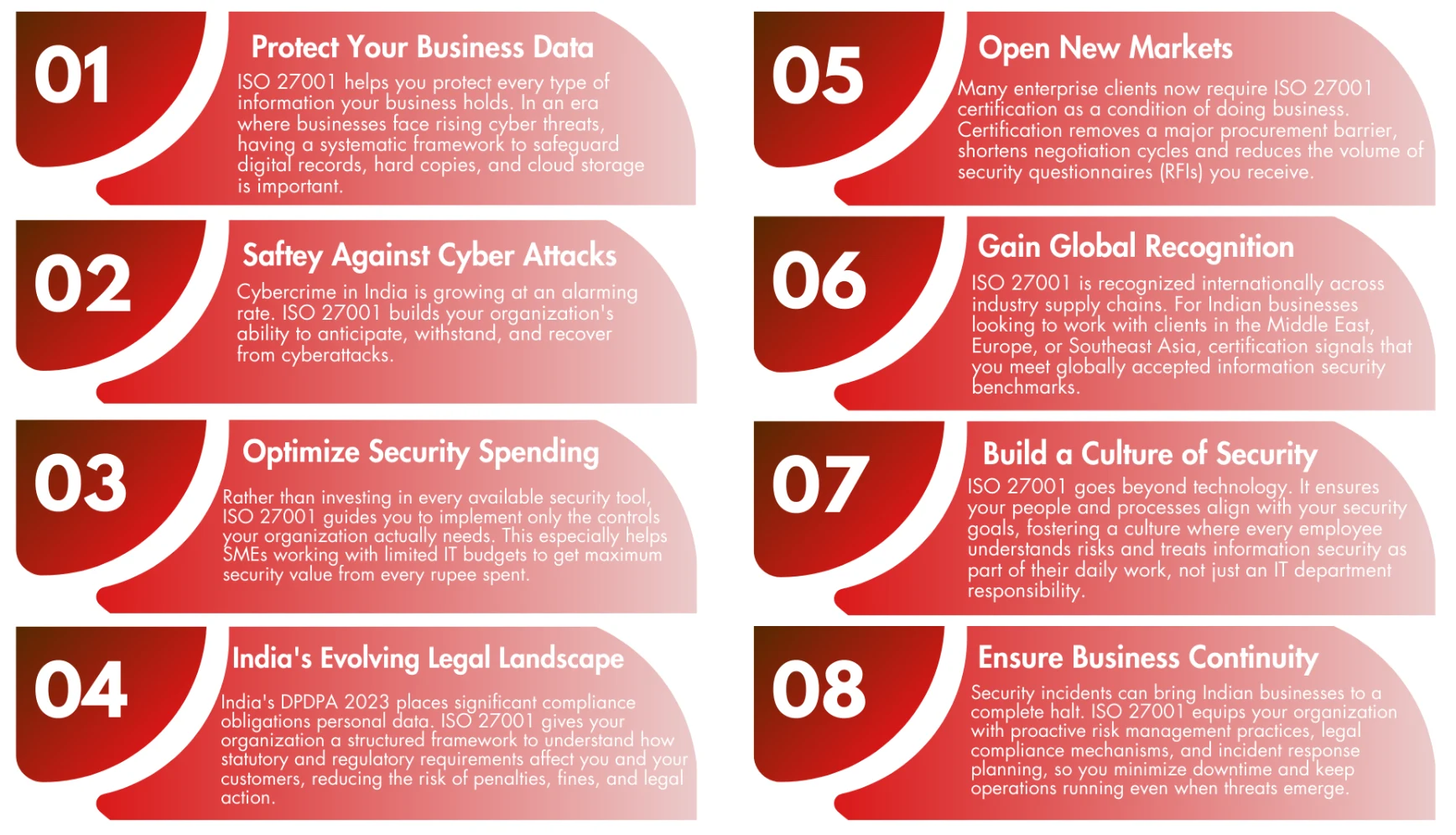
- Improved Data Protection: Protects sensitive information from breaches, cyberattacks, and unauthorized access.
- Stronger Customer Trust: Demonstrates your commitment to protecting client and stakeholder data.
- Regulatory Compliance: Supports alignment with global regulations and industry security requirements.
- Competitive Advantage: Helps win enterprise contracts where security certification is mandatory.
- Risk Management: Identifies and mitigates potential security risks proactively.
How ISO 27001 Integrates With Other Management Standards
ISO 27001 follows the common High-Level Structure (Annex SL) used across modern ISO standards. This makes it easy to integrate with other management systems and create a unified compliance framework.
- ISO 9001 (Quality Management) + ISO 27001: Aligns quality management with information security practices for improved operational consistency.
- ISO 22301 (Business Continuity) + ISO 27001: Combines information security with operational resilience during disruptions.
- ISO 27701 (Privacy Information Management) + ISO 27001: Extends your ISMS to include structured privacy and personal data protection.
This integrated approach reduces audit duplication, simplifies documentation, and lowers certification costs.
ISO 27001 vs ISO 27002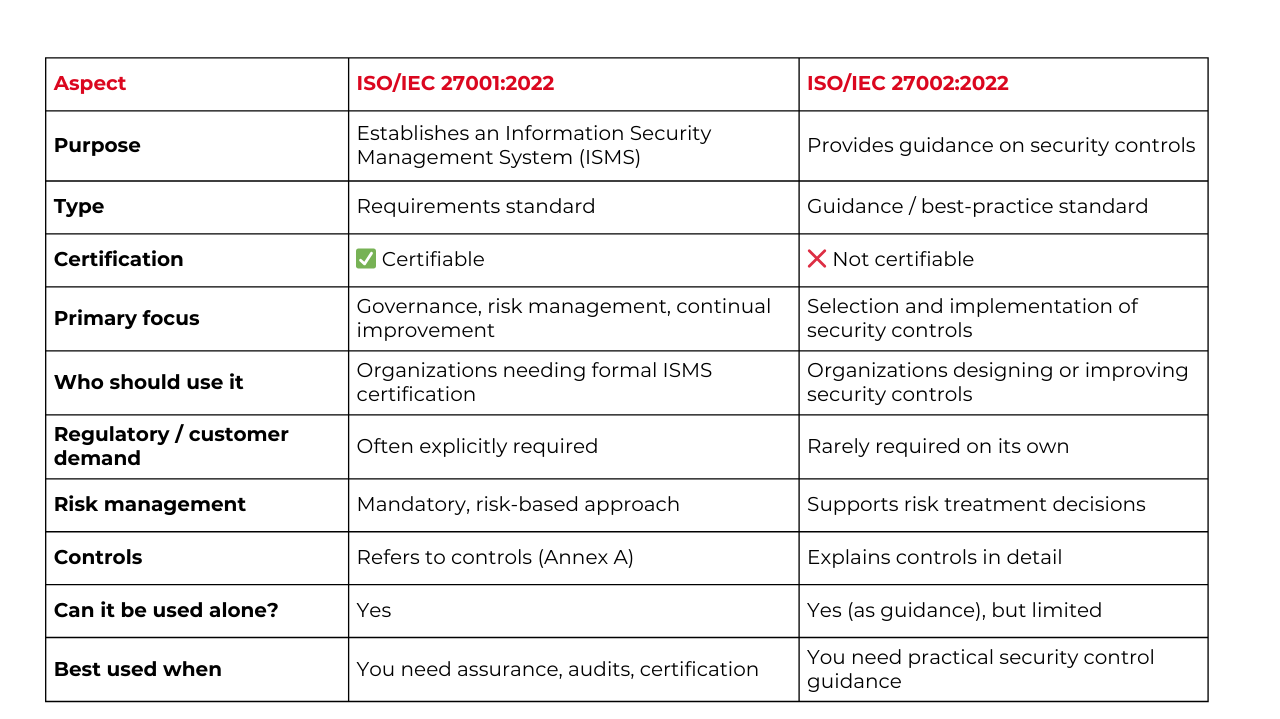
ISO 27001 defines the mandatory requirements for establishing and maintaining an Information Security Management System. ISO 27002 provides guidance on implementing the security controls referenced in ISO 27001.
ISO/IEC 27001:2013 vs ISO/IEC 27001:2022
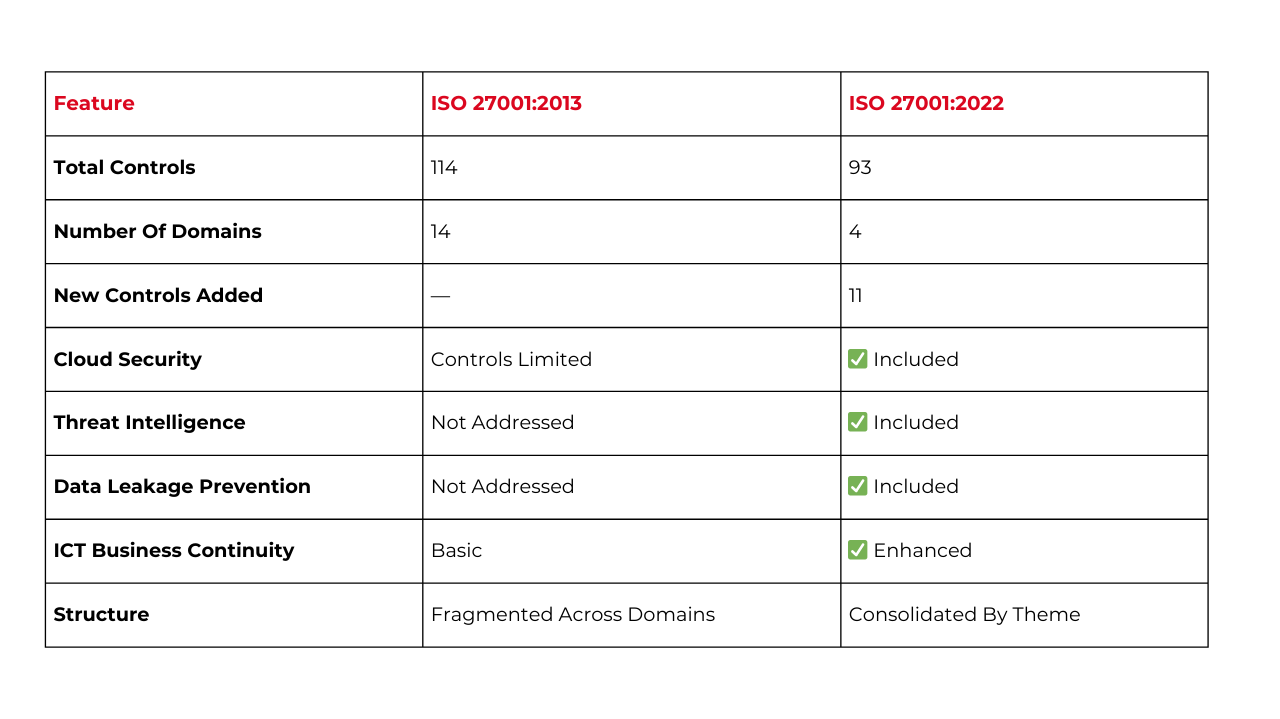
The 2022 revision modernizes the security framework by consolidating and updating controls to better address today's cyber threat landscape.
- Simpler Implementation: Controls reduced from 114 to 93 through consolidation and restructuring.
- Modern Security Controls: New controls address cloud security, threat intelligence, and data protection.
- Improved Risk Management: Controls organized into four themes — Organizational, People, Physical, and Technological.
- Updated Certification Framework: All certification audits now follow the ISO 27001:2022 structure.
Why Choose Quality Austria Central Asia?
Quality Austria Central Asia conducts ISO 27001 certification through accredited certification bodies following ISO/IEC 27001:2022 requirements.
Our experienced auditors work across multiple industries including IT, finance, healthcare, and manufacturing, ensuring your organization’s information security practices are thoroughly evaluated.
We also provide professional training programs including:
Short FAQs
ISO 27001 certification is valid for three years with annual surveillance audits.
The 2022 version includes 93 security controls across four categories.
ISO 27001 strongly supports GDPR compliance by establishing structured security governance.
No. ISO 27002 is a guidance standard and cannot be certified independently.
For any queries or further information related to our services, please contact us at info@qacamail.com or call +91 9599619392.